
How to Optimize for AI Search in 2026: The Complete Guide

Raman Singh
Raman Singh is a highly skilled marketing professional who serves as the head of marketing at Copyrocket AI

AI search has shifted from experimental feature to primary search method for millions of users. ChatGPT Search, Google AI Overviews, Perplexity, Claude, and Gemini now answer questions directly instead of showing link lists. This changes how content gets discovered.
Traditional SEO tactics don't guarantee visibility in AI-powered search. You need different strategies for ChatGPT citations, Google AI Overview inclusion, and Perplexity source selection. The good news: research shows 52% of AI Overview citations come from sites already ranking in the top 10 organic results. But 48% don't, creating new opportunities for visibility.
This guide teaches you platform-specific optimization strategies that get your content cited by AI models. You'll learn technical requirements, content structure patterns, and actionable tactics for each major AI search platform. By the end, you'll have a complete framework for optimizing content to appear in AI search results throughout 2026 and beyond.
The brands that start optimizing for AI search today will own the citations tomorrow. Let's begin.
What Is AI Search Optimization (And Why It Matters in 2026)
AI search optimization (AEO) targets AI-powered search engines and chatbots instead of traditional search results pages. Where SEO focuses on ranking high in link lists, AEO focuses on being selected as a cited source in AI-generated answers.
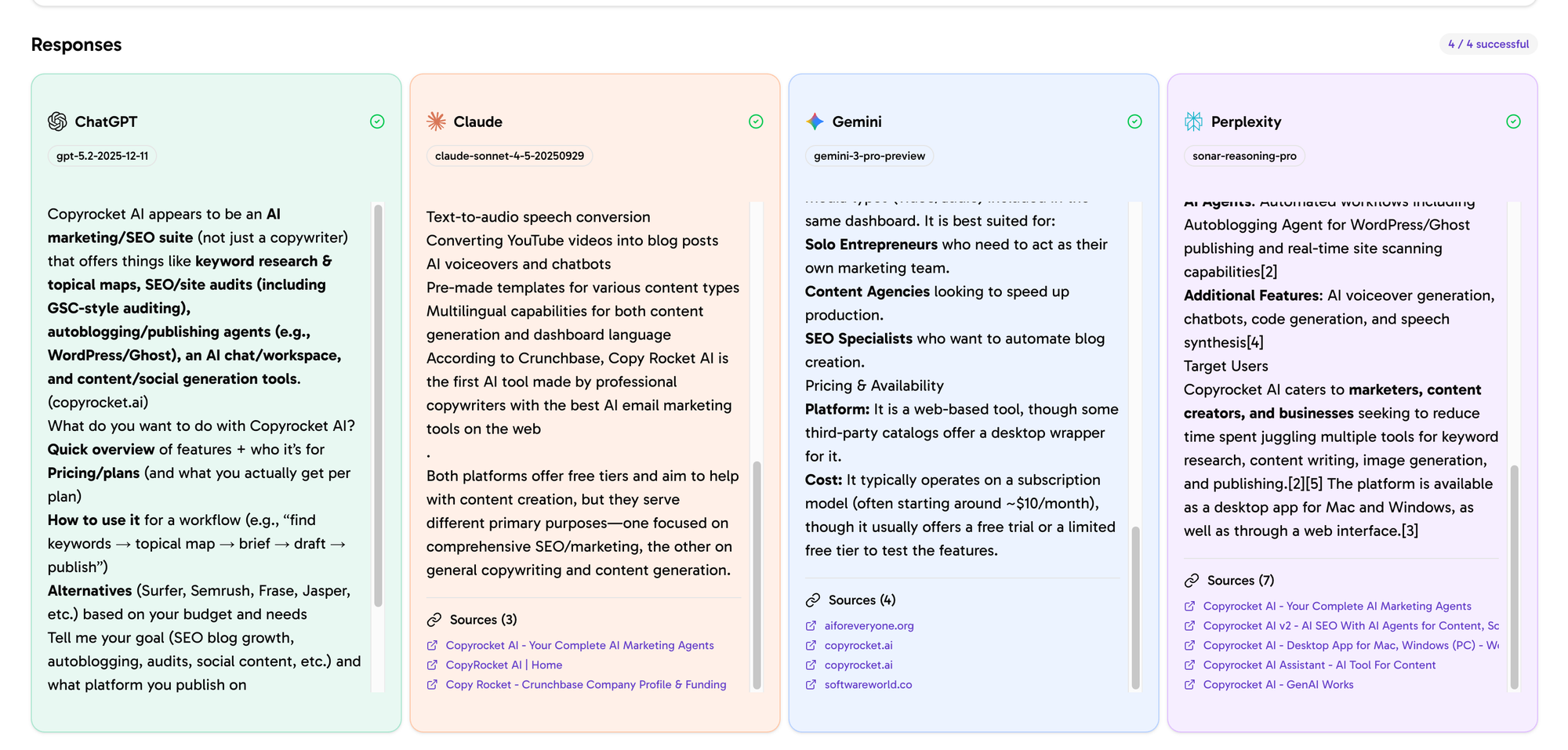
The core difference: AI search engines synthesize information from multiple sources into a single answer.
They cite sources they consider authoritative and helpful. Getting cited means your content appears directly in the answer, not buried on page two of search results.
Major AI search platforms include:
- ChatGPT Search - OpenAI's conversational search with real-time web access
- Google AI Overviews - AI-generated summaries at the top of Google search results
- Perplexity - Multi-source citation engine built for research queries
- Claude - Anthropic's AI assistant with web search and citation capabilities
- Gemini - Google's conversational AI with integrated search features
AI search queries are growing more than 300% year-over-year. Users prefer direct answers over clicking through multiple links. For businesses, being cited in AI search means reaching users at the exact moment they need information.
2026 is the inflection point where AI search moves from early adoption to mainstream behavior. The optimization strategies you implement now will determine your visibility for years ahead.
Signup to Copyrocket AI and Checkout our list of Generative Enegine optimization tools;
- LLM Mentions - Track any website's LLM presence.
- AI Responses - See how any prompt work on AI responses with citations.
- AI Keyword research - Research with real volume data.
How AI Search Engines Work (The Technical Foundation)
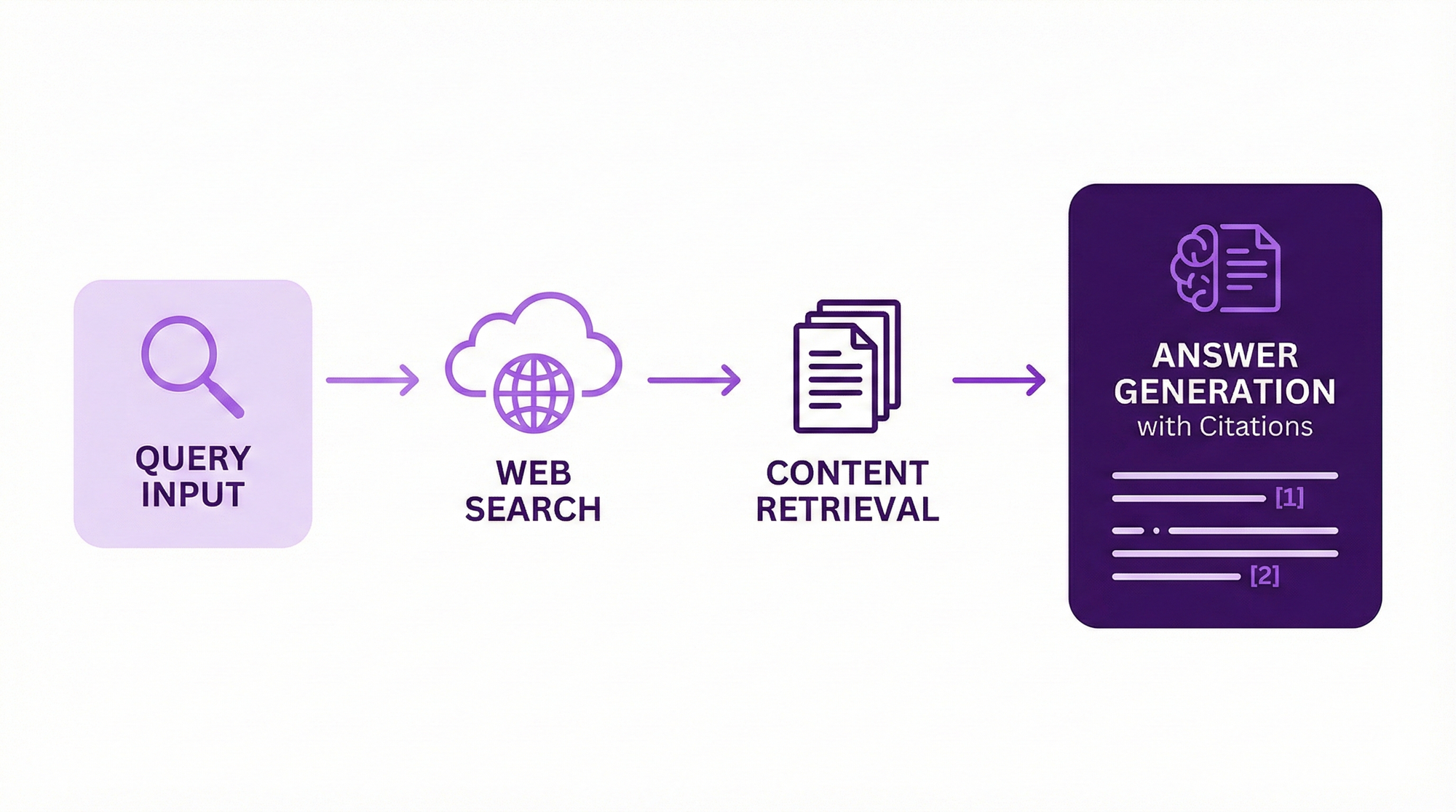
AI search engines use retrieval-augmented generation (RAG) to answer queries.
Here's how it works: when you ask a question, the AI model first searches the web or a pre-indexed database for relevant sources. It retrieves the most helpful content, then generates an answer using that information while citing sources.
This process differs from traditional search engines that match keywords to indexed pages. AI models evaluate content based on how well it answers the specific question asked, not just keyword density.
AI models select sources to cite based on several factors:
- Content quality and accuracy
- Clear, direct answers to the query
- Authority signals like backlinks and domain reputation
- Content structure that's easy to parse (headers, lists, tables)
- Freshness and recent updates
Different platforms access information differently. ChatGPT Search uses Bing's search API for real-time web access. Google AI Overviews pull from Google's own index. Perplexity uses multiple search engines and can access content in real-time. Claude and Gemini use various web search capabilities depending on the query.
Token limits affect what gets cited. AI models have context windows that limit how much text they can process at once. Content that answers questions concisely within the first few paragraphs has better chances of citation than content that buries answers deep in long articles.
Some content gets cited while similar content gets ignored. The difference comes down to how easily AI models can extract information. Clear headers, direct answers, and well-structured content make extraction easier.
Platform-Specific Optimization: ChatGPT Search
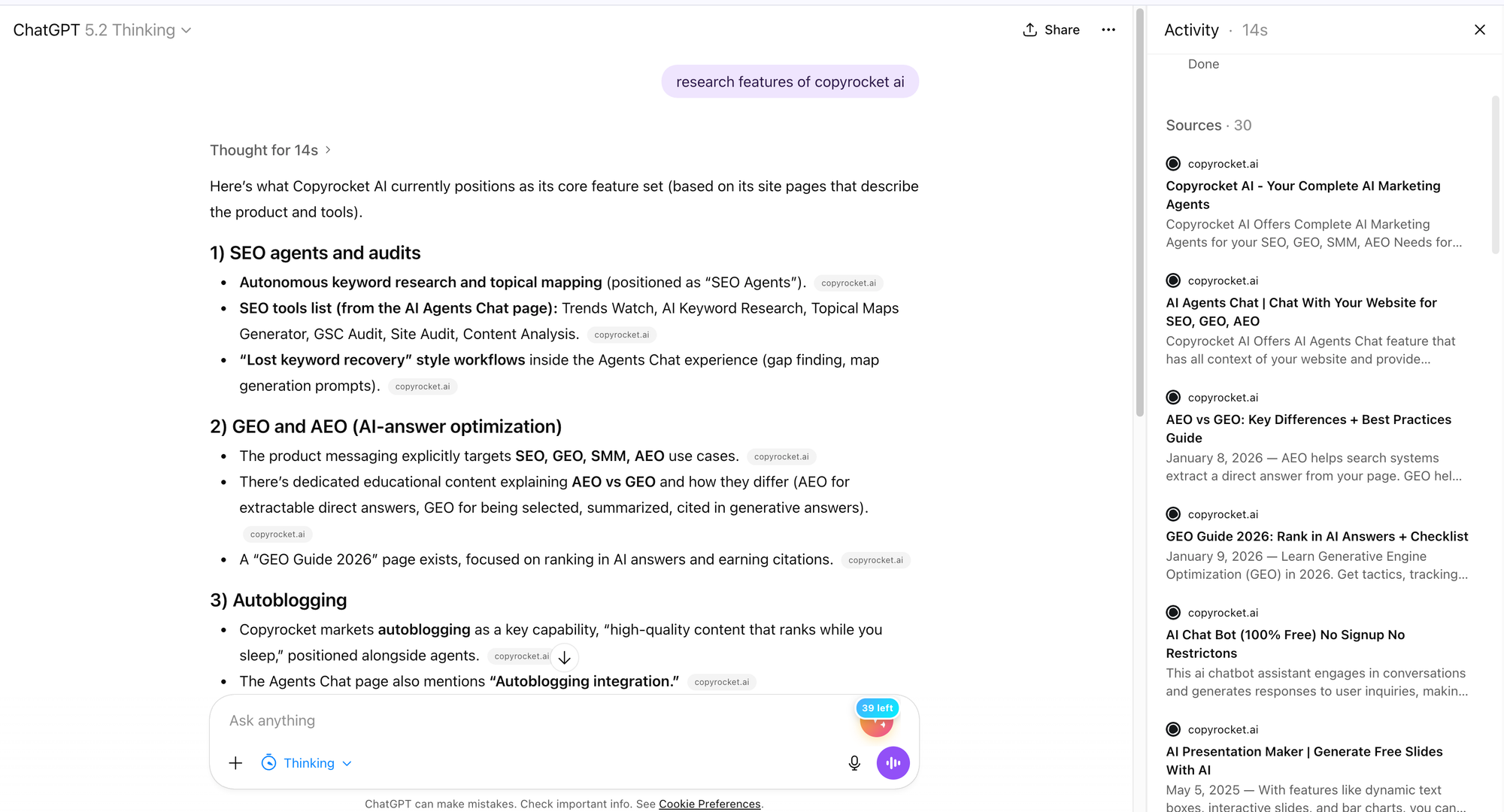
ChatGPT Search accesses the web through Bing's search infrastructure. This means content that performs well in Bing has advantages in ChatGPT Search visibility. However, the AI layer adds selection criteria beyond traditional Bing ranking factors.
ChatGPT prefers content formats that provide clear, direct answers. Listicles, how-to guides, and FAQ formats perform well. The AI model looks for content that matches conversational query patterns since users ask ChatGPT questions in natural language.
Technical requirements for ChatGPT Search crawling:
Check your robots.txt file for these user agents: GPTBot and ChatGPT-User. If you're blocking these, ChatGPT Search cannot access your content. Most sites should allow both unless you explicitly don't want AI systems using your content.
User-agent: GPTBot
Allow: /

User-agent: ChatGPT-User
Allow: /
Writing style matters for ChatGPT citations. The AI model favors content that:
- Answers questions in the first paragraph
- Uses clear subject-verb-object sentence structure
- Defines terms before using them
- Provides step-by-step instructions when relevant
- Includes examples that illustrate concepts
Before and after example:
❌ Before: "The optimization of your digital presence for conversational AI platforms requires understanding the underlying mechanisms through which these systems parse and evaluate content relevance."
✅ After: "Optimize for ChatGPT Search by writing clear, direct answers. Put the answer in your first paragraph. Use simple sentences. Define technical terms when you introduce them."
ChatGPT Search tends to cite primary sources over aggregated content. If you publish original research, data, or expert insights, you have higher citation potential than sites that summarize information from other sources.
Platform-Specific Optimization: Google AI Overviews
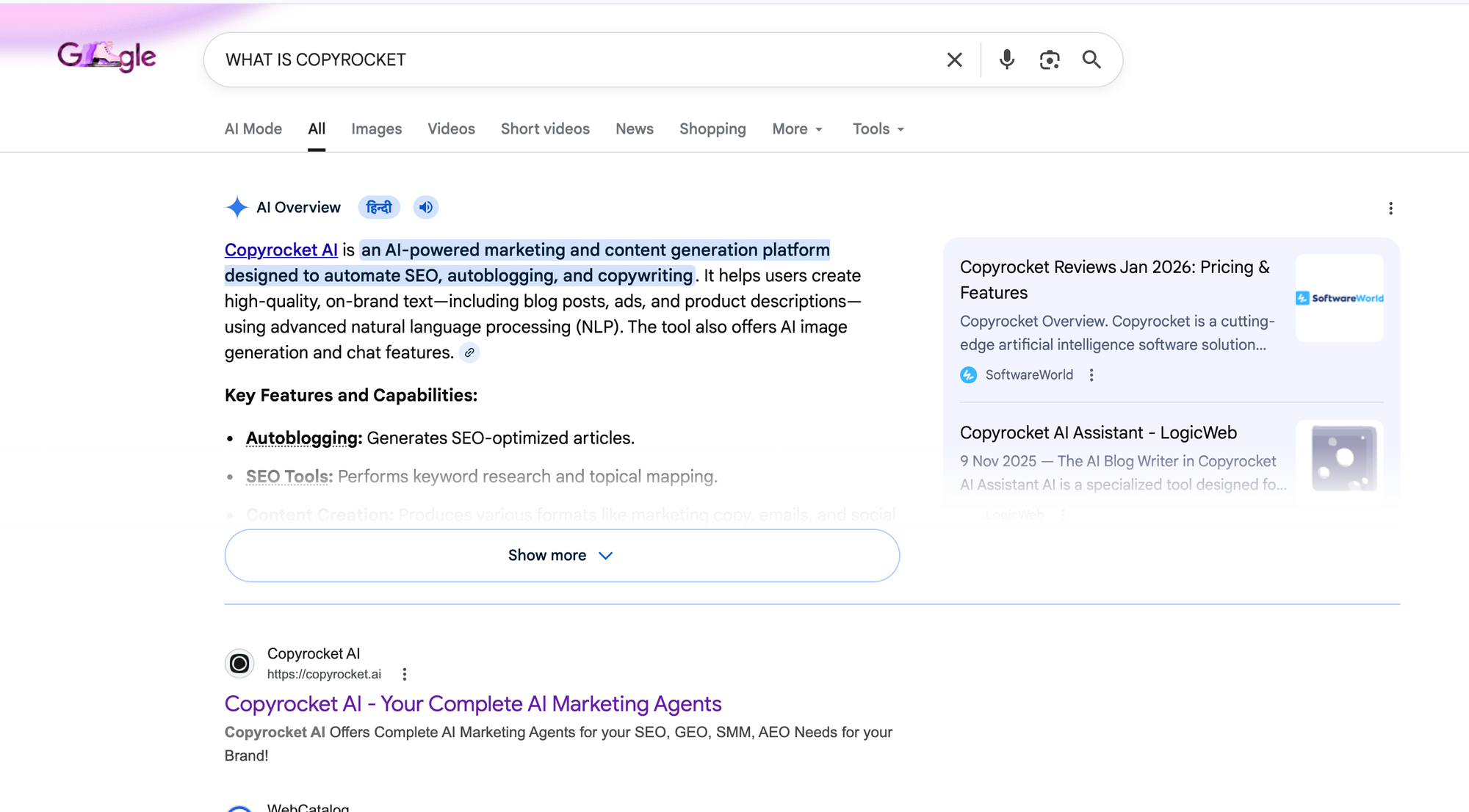
Google AI Overviews appear at the top of search results for many queries. They synthesize information from multiple sources into a comprehensive answer. Getting cited in AI Overviews drives significant visibility since they appear above all organic results.
AI Overviews differ from featured snippets in several ways. Featured snippets pull content directly from one page. AI Overviews synthesize information from multiple pages and rewrite it into a cohesive answer. Citations appear as clickable links within the AI-generated text.
Google's E-E-A-T signals (Experience, Expertise, Authority, Trust) matter even more for AI Overviews than traditional rankings. The AI model prioritizes content from sources that demonstrate clear expertise and authority.
Schema markup increases your chances of appearing in AI Overviews. These schema types help Google understand your content:
- Article schema - Identifies your content as a news article or blog post
- FAQ schema - Marks frequently asked questions and answers
- HowTo schema - Identifies step-by-step instructions
- Product schema - Provides product information for commercial queries
- Organization schema - Establishes your business identity and authority
Content structure for AI Overview inclusion follows specific patterns.
Use H2 headers for main topics and H3 headers for subtopics. Keep paragraphs short (2-4 sentences). Answer the query directly in the opening paragraph, then provide supporting details.
Research shows 52% of AI Overview citations come from pages already ranking in the top 10 organic positions. This overlap means strong traditional SEO still matters. But the 48% that come from outside the top 10 represent new opportunities for sites that optimize specifically for AI citations.
Page experience and Core Web Vitals affect AI Overview selection. Google considers user experience metrics as requirements for citation. Slow pages or sites with poor mobile experiences rarely get cited, even if their content quality is high.
Platform-Specific Optimization: Perplexity
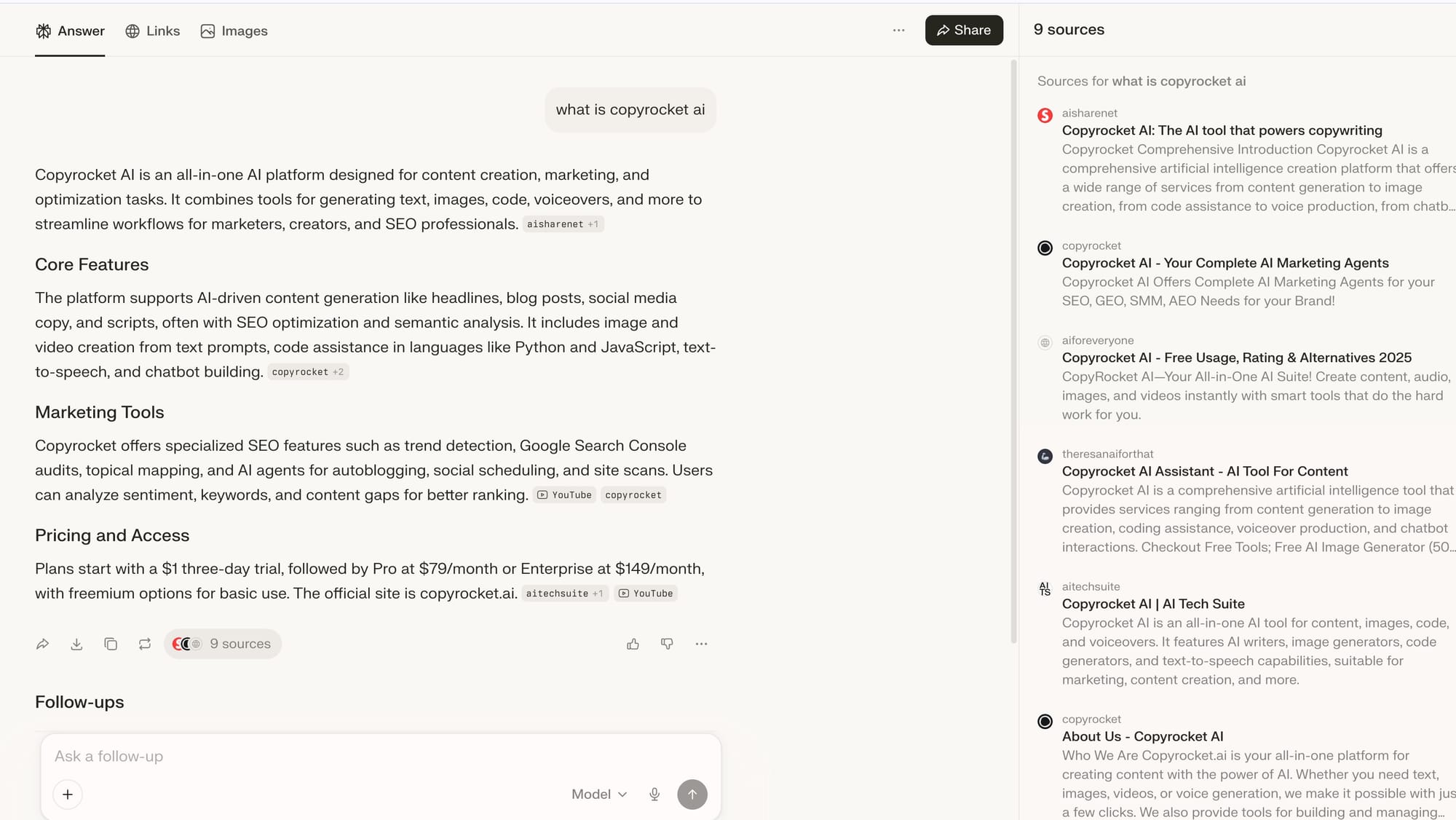
Perplexity takes a different approach to AI search. It displays multiple sources for every answer and encourages users to explore cited content. This multi-source citation model creates more opportunities for visibility compared to single-citation systems.
Perplexity marks certain domains as "frequently cited" when they appear consistently across multiple queries. Becoming a frequently cited source for your topic area drives ongoing visibility and traffic. The platform values sources that provide comprehensive, well-researched answers.
Real-time web access gives Perplexity advantages for current information. The platform can access content published minutes ago, making it valuable for news, trends, and time-sensitive topics. Content freshness and regular updates increase citation frequency.
Perplexity performs well with academic-style content. Citations, references to studies, data-backed claims, and research methodology details increase credibility. If you publish content with statistical evidence or reference primary research, Perplexity tends to cite it more frequently.
Content that answers complex questions with depth tends to outperform surface-level overviews. Perplexity users often ask detailed, nuanced questions. Content that explores topics thoroughly with multiple angles and considerations gets selected more often.
The platform's interface shows citations prominently with thumbnail images and descriptions. Clear meta descriptions and high-quality images created with AI tools increase click-through rates from Perplexity citations even if they don't directly affect citation selection.
Platform-Specific Optimization: Claude and Gemini
Claude and Gemini represent the next generation of conversational AI with search capabilities. Both platforms can access external information and cite sources when generating responses. Their citation patterns reveal what content these models value most.
Claude uses web search tools selectively based on query type and context. The system prioritizes sources that provide direct answers with clear attribution. Content with proper citations, references, and source links performs better since Claude's training emphasizes accuracy and verifiable information.
Citation patterns in Claude responses favor:
- Content with clear section headers that match query topics
- Definitions and explanations that don't assume prior knowledge
- Examples that illustrate abstract concepts
- Step-by-step procedures with clear ordering
- Recent content with updated information
Gemini integrates deeply with Google's search infrastructure, giving it access to Google's entire index. This integration means content that ranks well in Google has advantages in Gemini citations. However, Gemini's conversational nature means it selects sources differently than traditional Google Search.
Authority signals matter significantly for both platforms. Content from recognized experts, publications with established reputations, and sites with strong backlink profiles get cited more frequently. Both models evaluate source credibility as part of their citation selection process.
Technical documentation and detailed how-to content perform exceptionally well with Claude and Gemini. Both platforms handle complex, technical queries where users need in-depth explanations. Content that breaks down complicated topics into understandable segments gets selected for these queries.
Content depth beats breadth for conversational AI citations. A 2,000-word article that thoroughly covers one specific topic outperforms a 5,000-word article that briefly mentions ten topics. Focus your content on comprehensive coverage of specific questions.
Content Structure for AI Citation Success
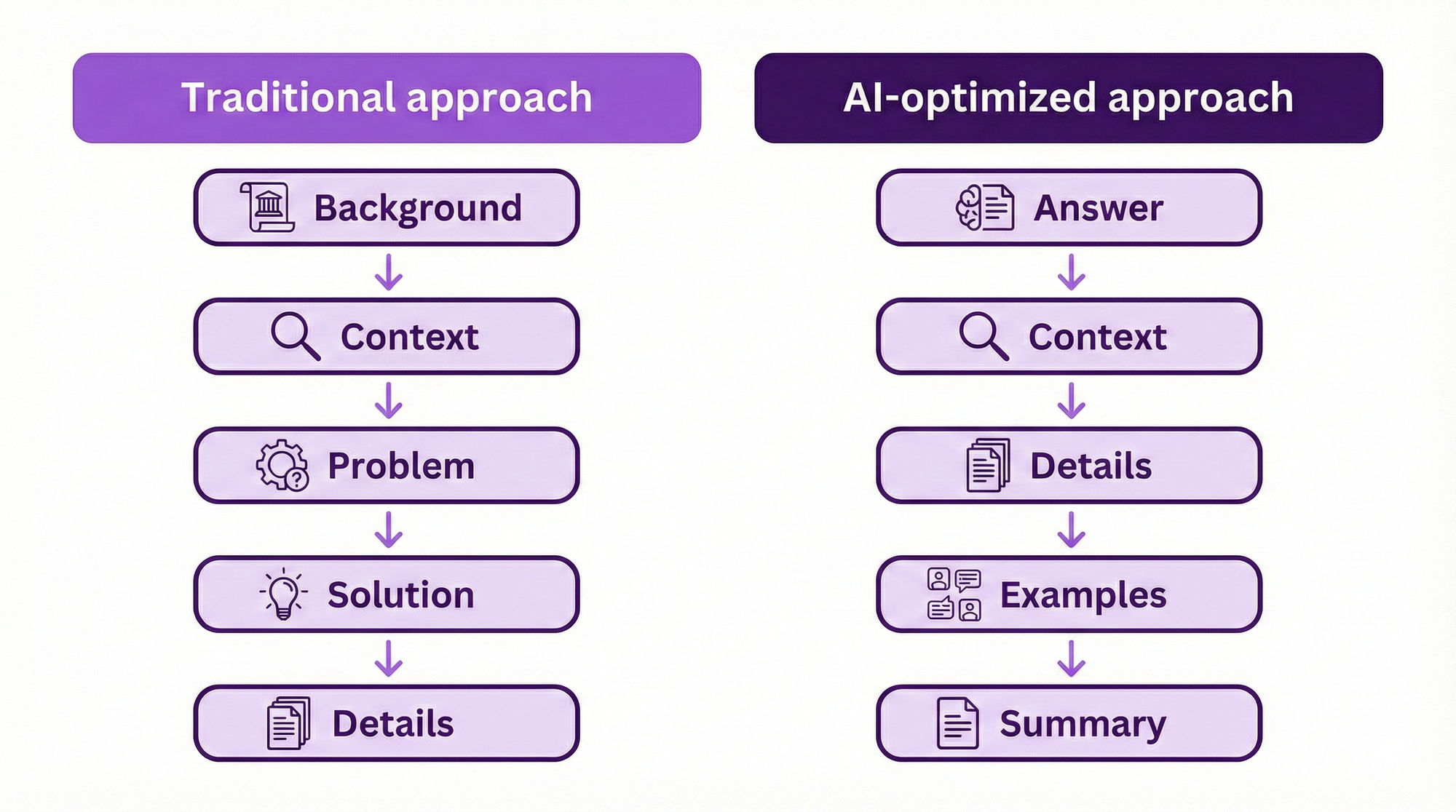
AI search engines parse content structure before evaluating the actual information. How you format content affects whether AI models can extract and cite your information. Following specific structural patterns dramatically increases citation probability.
Answer-first writing puts the solution or answer in the opening paragraph. Traditional content often builds up to the answer after providing background. AI models favor content that immediately addresses the query. State your answer first, then explain supporting details.
Example structure:
Traditional approach: Background → Context → Problem → Solution → Details AI-optimized approach: Answer → Context → Details → Examples → Summary
Optimal heading hierarchy follows H1 → H2 → H3 patterns that AI models parse easily. Your H1 should match the main query. H2 headers should cover subtopics or related questions. H3 headers can break down complex H2 sections into smaller pieces.
Good heading structure:
H1: How to Optimize Images for Web Performance
  H2: Choose the Right Image Format
    H3: When to Use JPEG
    H3: When to Use WebP
  H2: Compress Images Without Quality Loss
  H2: Implement Lazy Loading
Paragraph length affects AI comprehension. Keep paragraphs to 2-4 sentences maximum. Each paragraph should express one complete idea. Shorter paragraphs make content easier to scan and extract.
Sentence structure should follow subject-verb-object order when possible. Complex nested clauses confuse AI parsing. Direct sentences communicate ideas clearly to both AI models and human readers.
Bullet points, tables, and lists help AI models identify structured information quickly. Use bulleted lists for items without specific order. Use numbered lists for sequential steps. Use tables when comparing multiple items across different attributes.
Information density matters more than word count. AI models prefer content that provides maximum value per paragraph. Remove filler sentences and get to the point quickly. Every sentence should add new information or clarification.
Technical SEO Requirements for AI Visibility
Technical foundation determines whether AI platforms can access your content at all. Before optimizing content for citations, ensure AI crawlers can discover and read your pages. Missing these technical requirements means zero AI visibility regardless of content quality.
Robots.txt configuration controls which AI platforms can crawl your site. Each major platform uses specific user agents. Your robots.txt file should allow the user agents you want to access your content.
Key AI crawler user agents:
# OpenAI (ChatGPT)
User-agent: GPTBot
User-agent: ChatGPT-User

# Google (Gemini, AI Overviews)
User-agent: Google-Extended
User-agent: Googlebot

# Anthropic (Claude)
User-agent: ClaudeBot
User-agent: Claude-Web

# Common Crawl (used by many AI systems)
User-agent: CCBot

# Allow or Disallow based on your preference
Allow: /
Check your current robots.txt at yoursite.com/robots.txt. If you see "Disallow: /" for these user agents, you're blocking AI crawlers. Remove those restrictions to enable AI search visibility.
Schema markup helps AI systems understand what your content represents. Implement these schema types based on your content:
- Article schema - Use for blog posts, news articles, or editorial content
- FAQPage schema - Mark Q&A sections with this schema for better AI parsing
- HowTo schema - Apply to instructional content with numbered steps
- Product schema - Required for product pages to appear in commercial AI responses
- Organization/LocalBusiness schema - Establishes entity information AI models use for verification
Page speed and Core Web Vitals impact AI citation selection indirectly. Google AI Overviews rarely cite slow-loading pages. Other AI platforms don't directly measure page speed, but slow pages often have other quality issues that reduce citation probability.
Mobile-friendliness isn't optional for AI search. Most AI queries happen on mobile devices. Pages that don't work well on mobile get filtered out during source selection. Test your pages with Google's Mobile-Friendly Test tool.
XML sitemaps help AI crawlers discover content efficiently. Include all pages you want indexed in your sitemap. Submit your sitemap to Google Search Console and update it when publishing new content.
Crawl optimization prevents technical barriers to AI access. Check for:
- Broken internal links that disrupt crawler navigation
- Redirect chains that waste crawler resources
- Orphan pages without internal links pointing to them
- JavaScript rendering issues that hide content from crawlers
- Server errors or timeout issues during crawling
Creating Citation-Worthy Content
AI models cite content they consider authoritative, accurate, and helpful. Creating citation-worthy content requires understanding what makes information valuable to AI systems and the users they serve.
Primary source content significantly outperforms aggregated content. Original research, proprietary data, unique methodologies, and firsthand experiences get cited more frequently than content that summarizes information from other sources. AI models recognize and prioritize original information.
Examples of primary source content:
- Original research studies and survey results
- Case studies from your own projects or clients
- Data analysis using your own datasets
- Expert interviews you conducted
- Technical documentation for your own tools or systems
- Before-and-after results from your implementations
Data, statistics, and original research carry special value. AI models look for quantifiable evidence to support claims. When you include specific numbers, percentages, or research findings, cite your sources or explain your methodology. This transparency increases citation trust.
Expert quotes and attribution strengthen content authority. When you reference experts, include their credentials and explain why their expertise matters. Direct quotes from recognized authorities in your field signal to AI models that your content draws from credible sources.
Clear definitions and explanations help AI models understand your content. Define technical terms when introducing them. Explain concepts before building on them. Don't assume readers have background knowledge. This clarity benefits both AI comprehension and reader experience.
Step-by-step instructions and frameworks provide actionable value AI models seek. Content that teaches users how to accomplish tasks gets cited frequently. Break complex processes into numbered steps. Include what success looks like at each stage. Using AI-generated prompts can help structure your instructional content effectively.
Framework for creating instruction content:
- State the end goal clearly
- List prerequisites or materials needed
- Provide numbered steps in logical order
- Explain why each step matters
- Show expected results or outcomes
- Offer troubleshooting tips for common issues
Case studies and real-world examples make abstract concepts concrete. AI models cite content that illustrates ideas with specific scenarios. Include details like company names (with permission), actual metrics, timelines, and challenges faced. You can even create visual presentations to demonstrate complex concepts.
Content depth and comprehensiveness matter for AI citations. Shallow content that skims the surface rarely gets cited. Deep content that thoroughly explores a topic becomes a go-to source. Aim for completeness within your chosen topic rather than brief coverage of many topics.
Keyword Strategy for AI Search
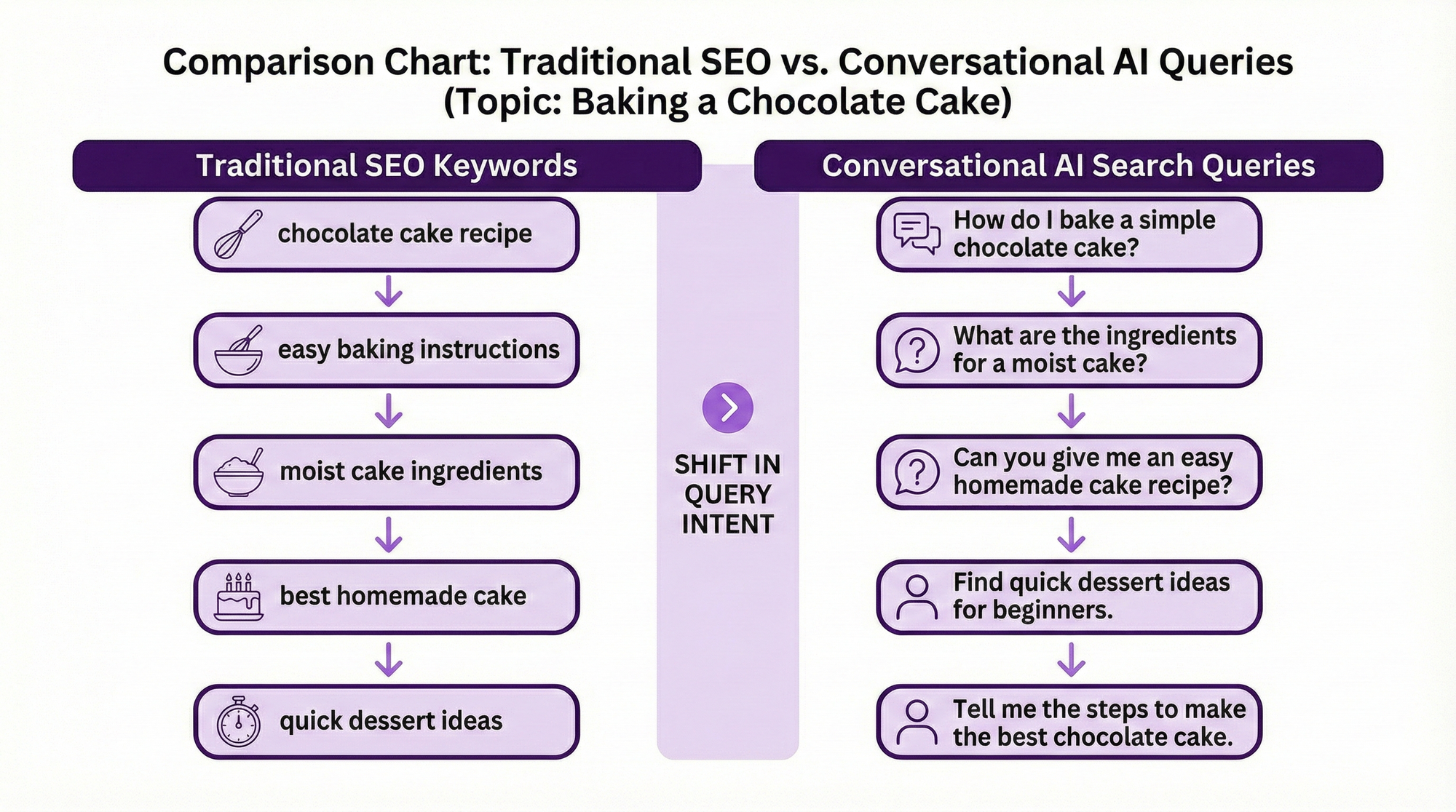
Keywords work differently in AI search compared to traditional SEO. AI models understand semantic meaning and context, not just exact keyword matches. This changes how you approach keyword selection and placement.
AI search engines process queries as natural language questions. People ask ChatGPT "How do I optimize images for web performance?" instead of searching Google with "image optimization web." Your content should match these conversational query patterns.
Question-based keywords represent the biggest opportunity in AI search. Identify questions your audience asks about your topic. Structure content to answer those questions directly. Tools like AnswerThePublic and Google's "People Also Ask" reveal common question patterns.
Long-tail opportunities expand in AI search. Traditional SEO often focuses on high-volume short keywords.
AI search rewards content that addresses specific, detailed questions even if search volume is lower. A page answering "How to optimize PNG files for retina displays" might get more AI citations than generic "image optimization" content.
Keyword placement helps AI models recognize relevance. Include your target keyword in:
- Page title (H1)
- First paragraph (within first 100 words)
- At least one H2 heading
- Naturally throughout the content (aim for 8-15 mentions in a 2,000-word article)
- Meta description
- Image alt text for related images
Balance traditional SEO keywords with conversational queries. Your content should rank for both "AI search optimization" (traditional keyword) and "How do I optimize my content for ChatGPT search?" (conversational query). Include both patterns in your content naturally.
Semantic keyword clustering groups related terms and concepts. AI models understand that "automobile," "car," and "vehicle" relate to the same concept. Use varied terminology that covers the semantic space around your topic. This helps your content match different phrasings of similar queries.
Avoid keyword stuffing more strictly in AI search. AI models detect unnatural keyword repetition and reduce citation probability. Focus on natural language that happens to include relevant keywords rather than forcing keywords into every sentence.
Authority and Trust Signals
AI models assess content authority before deciding to cite sources. They evaluate multiple trust signals that indicate whether content comes from credible, expert sources. Building these signals increases your citation probability across all AI search platforms.
The E-E-A-T framework (Experience, Expertise, Authority, Trust) originated with Google but applies to all AI search systems. Content that demonstrates clear experience and expertise from authoritative sources gets cited more frequently.
Experience signals show you've actually done what you're writing about. Include specific details, real examples, challenges faced, and lessons learned. Generic advice suggests inexperience. Specific details prove experience.
Demonstrating experience:
❌ "Many businesses struggle with SEO strategy." ✅ "When we optimized 47 client websites last year, we found 68% had crawl budget issues that prevented their best content from being indexed."
Expertise indicators include author credentials, bylines, and author pages. Create detailed author bios that establish qualifications. Link to other work by the same author. Show expertise through depth of knowledge rather than just claiming it.
Backlink profiles signal authority to AI systems. Sites with links from reputable domains get cited more frequently. While AI models don't access backlinks directly, strong backlink profiles correlate with content quality and authority. Focus on earning links from industry publications, educational institutions, and recognized experts.
Domain authority affects citation rates but isn't deterministic. New sites with excellent content can get cited even without extensive authority. However, established sites have advantages in citation selection when content quality is equal. Build authority through consistent publication of high-quality content.
Content freshness increases citation probability, especially for time-sensitive topics. AI models favor recent content when answering questions about current events, technology, or trending topics. Update existing content regularly with new information, statistics, and examples.
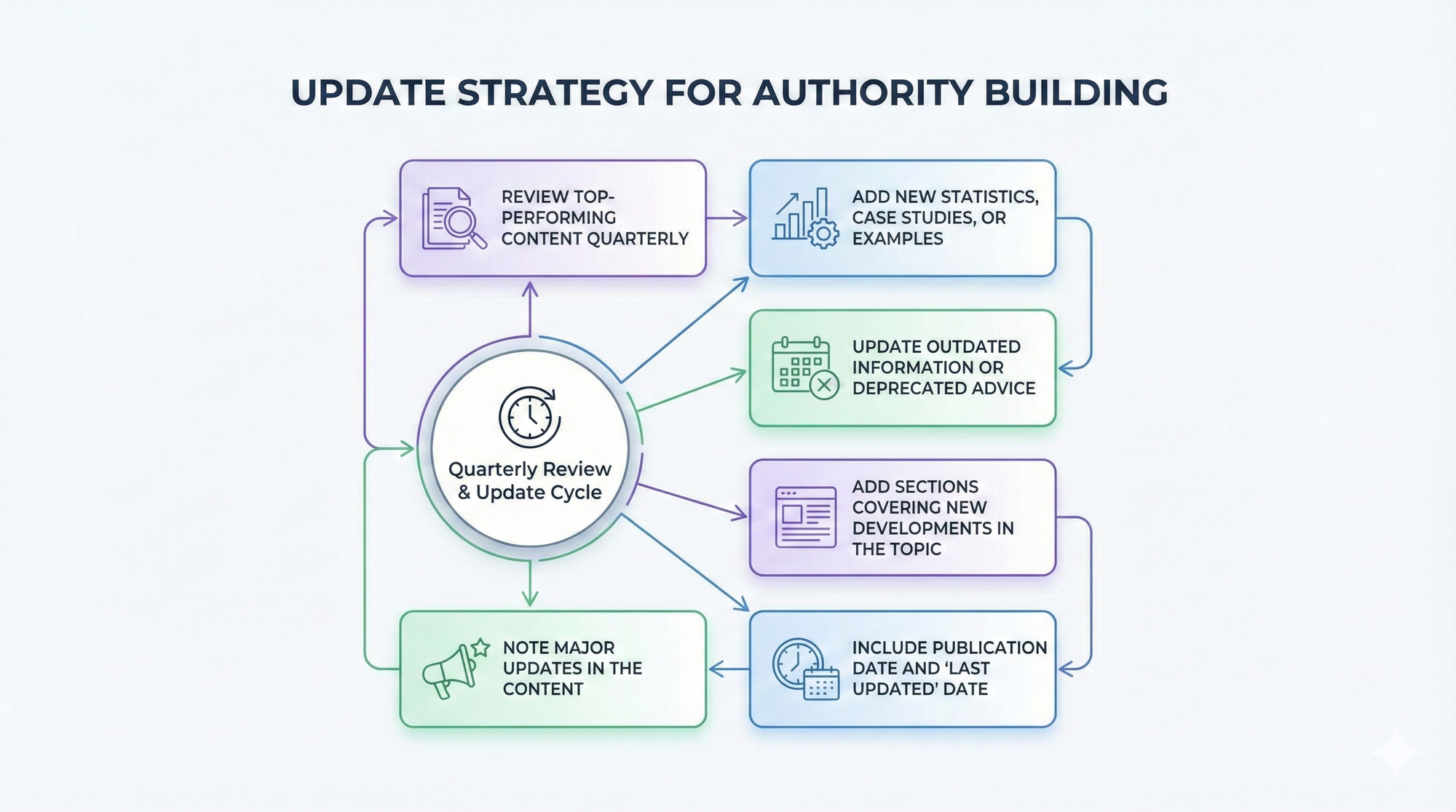
Update strategy for authority building:
- Review your top-performing content quarterly
- Add new statistics, case studies, or examples
- Update outdated information or deprecated advice
- Add sections covering new developments in the topic
- Include publication date and "last updated" date
- Note major updates in the content
External validation and citations strengthen your content authority. Reference reputable sources, link to studies and research, cite statistics with proper attribution. AI models interpret proper citation as a sign of credible, well-researched content.
Brand mentions across the web contribute to authority signals. When other sites mention your brand, products, or content without linking, AI systems still recognize these as authority indicators. Build brand awareness through social media, industry participation, and thought leadership.
Local SEO for AI Search
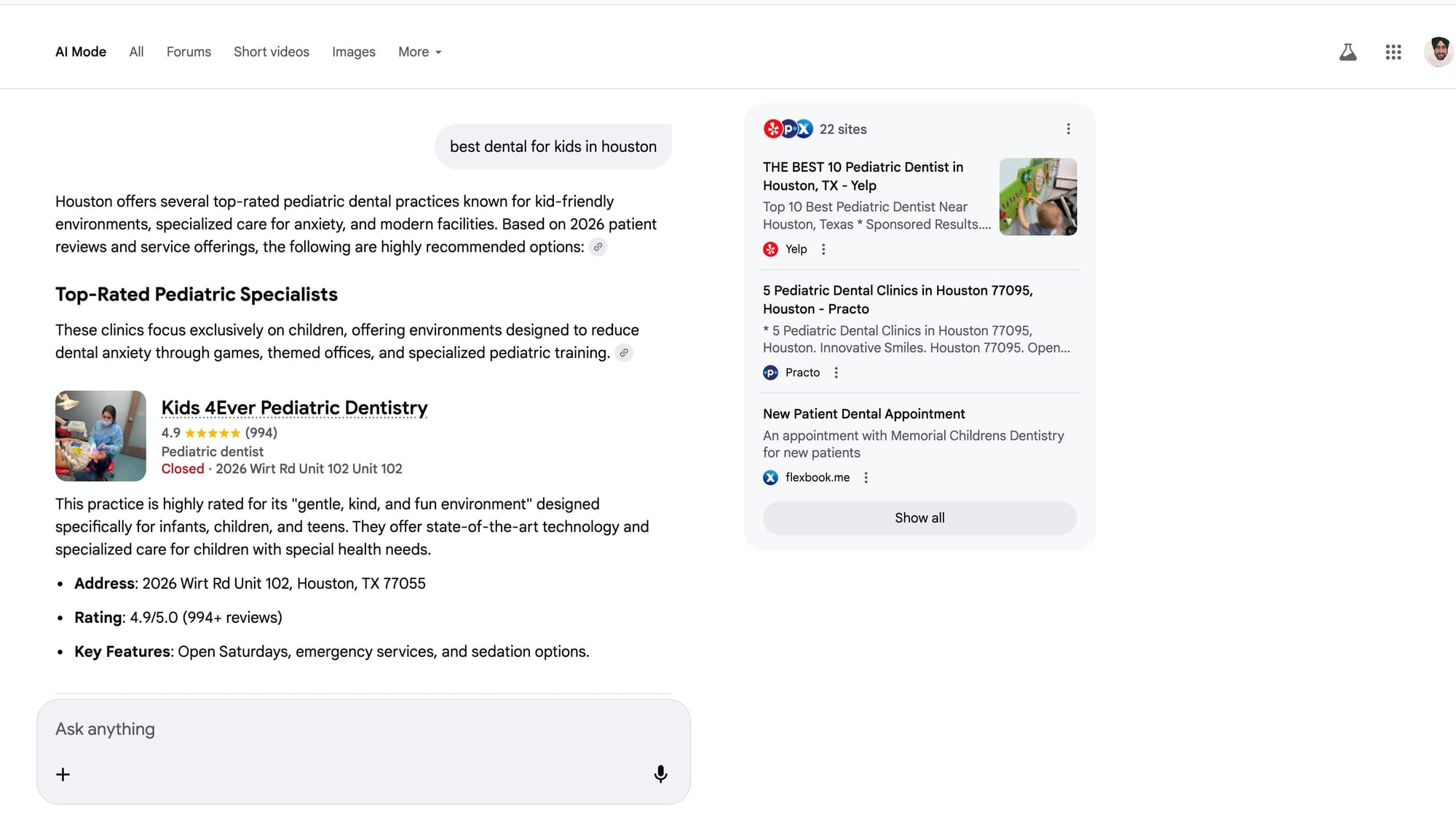
Local businesses benefit significantly from AI search optimization. When users ask location-specific questions, AI search engines prioritize local sources. Optimizing for local AI search requires combining traditional local SEO with AI-specific tactics.
Google Business Profile optimization becomes more critical for AI Overviews. AI-generated answers frequently cite information from Google Business Profiles for local queries. Complete every section of your profile. Add photos regularly. Respond to reviews. Keep hours updated.
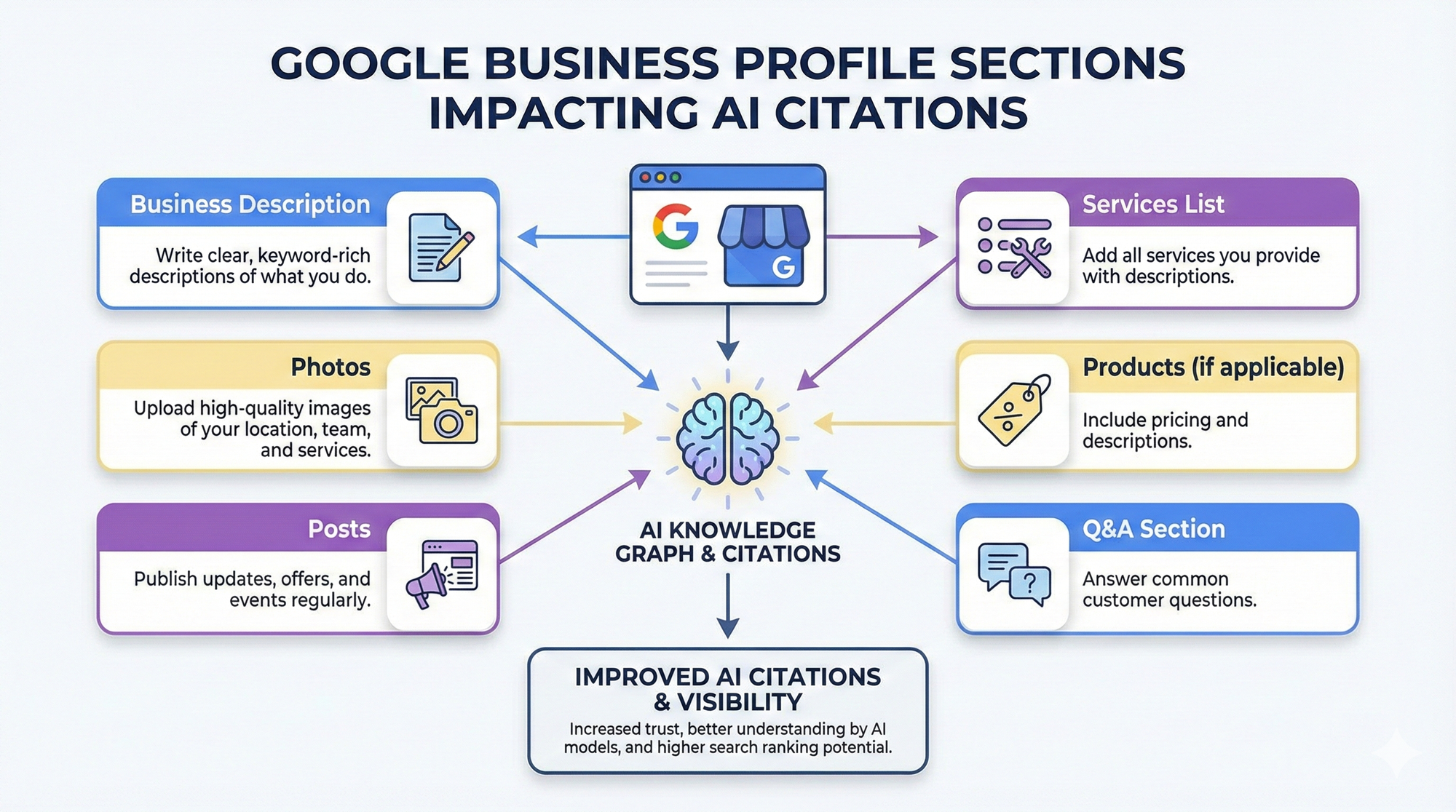
Google Business Profile sections that impact AI citations:
- Business description - Write clear, keyword-rich descriptions of what you do
- Services list - Add all services you provide with descriptions
- Products (if applicable) - Include pricing and descriptions
- Q&A section - Answer common customer questions
- Posts - Publish updates, offers, and events regularly
- Photos - Upload high-quality images of your location, team, and services
Local content that AI models cite answers location-specific questions. Create content about your area, local events, regional expertise, and community involvement. Content like "Roof Repair in Chicago" or "Best Restaurants in Austin" targets local AI search queries.
Location-specific answer optimization structures content around local queries. Include city names, neighborhoods, and regional terminology. Answer questions specific to your geographic area that national content can't address.
Example local content structure:
H1: Emergency Plumber in Downtown Seattle
  H2: 24/7 Plumbing Services in Seattle's Urban Core
  H2: What Seattle Residents Should Know About Local Water Systems
  H2: Common Plumbing Issues in Older Seattle Buildings
  H2: Service Areas: Capitol Hill, Belltown, and Pioneer Square
NAP consistency (Name, Address, Phone) across all platforms helps AI systems verify your business information. Inconsistent business information confuses AI models and reduces citation trust. Ensure your NAP matches exactly on:
- Your website
- Google Business Profile
- Social media profiles
- Directory listings
- Citation sites
Local schema markup helps AI systems understand your business entity. Implement LocalBusiness schema on your website with complete information:
json
{
  "@context": "https://schema.org",
  "@type": "LocalBusiness",
  "name": "Your Business Name",
  "address": {
    "@type": "PostalAddress",
    "streetAddress": "123 Main St",
    "addressLocality": "Seattle",
    "addressRegion": "WA",
    "postalCode": "98101"
  },
  "geo": {
    "@type": "GeoCoordinates",
    "latitude": "47.6062",
    "longitude": "-122.3321"
  },
  "telephone": "+1-206-555-0123",
  "priceRange": "$$",
  "openingHours": "Mo-Fr 08:00-17:00"
}
Local reviews impact AI search visibility directly. Google AI Overviews often include review information when citing local businesses. Encourage satisfied customers to leave reviews. Respond to all reviews professionally.
Measuring AI Search Performance
Tracking AI search visibility requires different approaches than traditional SEO analytics. Most AI platforms don't provide direct analytics for citations. You need manual monitoring combined with indirect metrics to measure performance.
You can use our LLM Mentions tool to see where you're ranking;
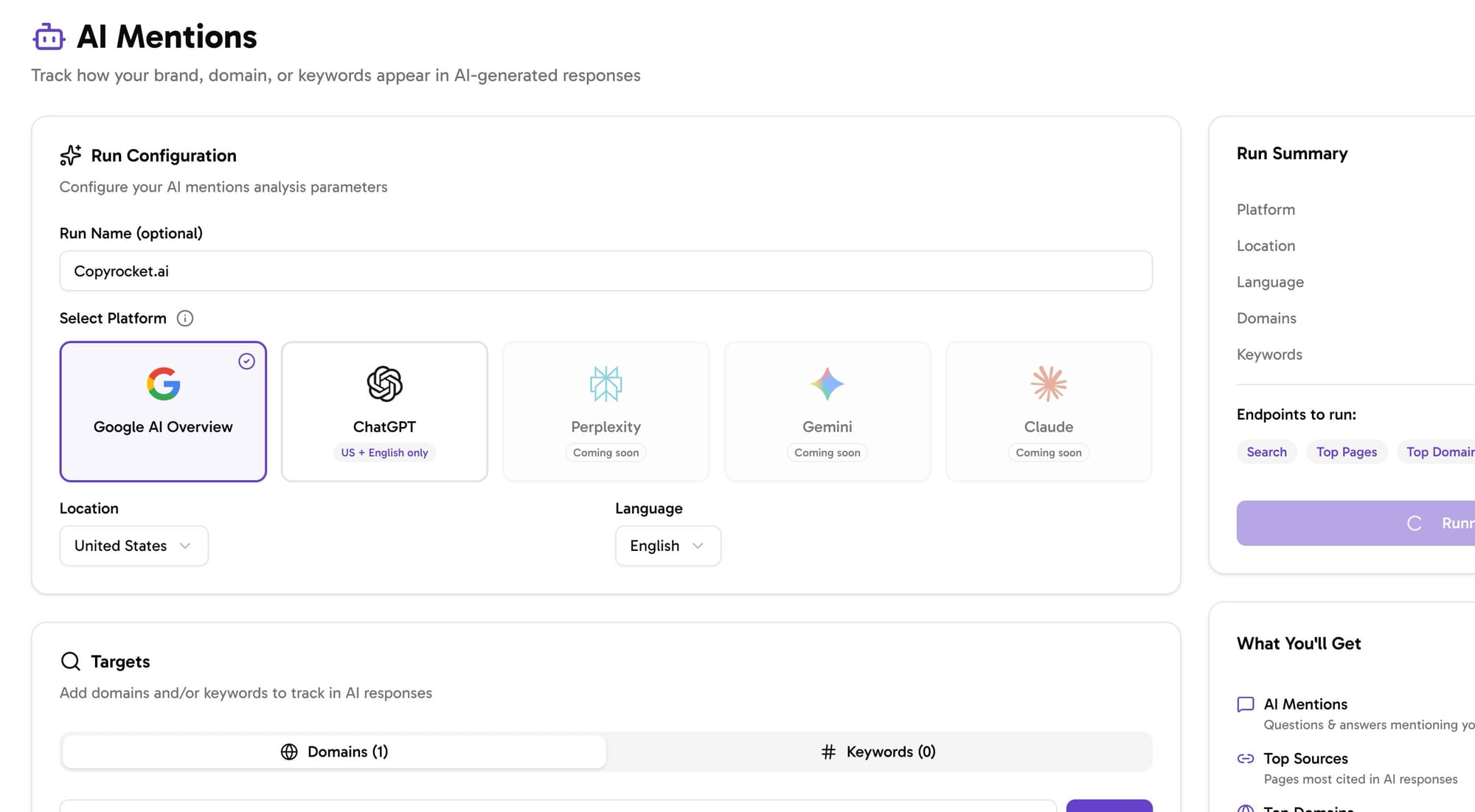
Manual citation tracking across platforms provides the most direct measurement. Create a list of your target keywords and queries. Search those terms in ChatGPT, Google (for AI Overviews), Perplexity, and other AI platforms. Record when your content gets cited. Track citation frequency over time.
Citation tracking spreadsheet structure:
| Date | Platform | Query | Cited? | Citation Position | URL Cited |
|---|---|---|---|---|---|
| 2026-01-15 | ChatGPT | "AI search optimization tips" | Yes | Primary | /blog/ai-search-guide |
| 2026-01-15 | Perplexity | "AI search optimization tips" | Yes | Source 3 of 8 | /blog/ai-search-guide |
| 2026-01-15 | Google AIO | "AI search optimization tips" | No | - | - |
Perform citation checks weekly for priority keywords. Monthly checks work for broader keyword lists. This manual process is time-intensive but provides accurate visibility data.
Brand mention monitoring tools track when AI systems reference your brand, even without direct citations.
Tools like Google Alerts, Talkwalker, and Mention can identify when AI-generated content includes your brand name. These mentions indicate growing authority in AI systems. You can also track your YouTube presence to monitor video content mentions.
Traffic attribution from AI search remains challenging. Most referral traffic from AI search appears as direct traffic or shows generic referral sources. Look for traffic patterns that correlate with AI search queries:
- Traffic spikes after appearing in AI citations
- Visitors with high engagement who accessed deep content directly
- Traffic from referral sources like "chat.openai.com" or "perplexity.ai"
- Direct traffic increases without corresponding campaign changes
Set KPIs that reflect AI search goals. Traditional metrics like rankings don't apply. Instead, track:
- Number of keywords where you're cited by AI platforms
- Citation frequency for priority keywords
- Brand mentions in AI-generated content
- Traffic from AI search referral sources
- Engagement metrics for traffic from AI citations (time on site, pages per session)
- Conversion rates from AI search traffic
Benchmark your current AI search visibility before optimization. Record baseline citation rates across platforms. Measure changes monthly to identify what optimization tactics drive improvement.
ROI calculation for AI search optimization combines citation visibility with business value. Estimate the value of traffic from AI citations based on conversion rates and customer lifetime value. Compare optimization costs against revenue gains from increased AI visibility.
Create monthly reports that track:
- Total citations across all platforms
- New keywords generating citations
- Lost citations to monitor
- Traffic trends from AI search
- Engagement metrics
- Competitive citation analysis (which competitors are getting cited for your keywords)
Common AI Search Optimization Mistakes to Avoid
AI search optimization is new enough that many sites make preventable mistakes. Avoiding these errors saves time and accelerates your AI visibility gains.
Over-optimization and keyword stuffing harm AI search performance more than traditional SEO. AI models detect unnatural language patterns. Content written for algorithms rather than humans gets filtered out during source selection. Write naturally first, optimize second.
Blocking AI crawlers accidentally is the most common technical mistake. Many sites add AI crawler user agents to robots.txt without understanding the impact. Before blocking any crawler, consider whether you want that platform accessing your content. Blocking GPTBot prevents all ChatGPT citations.
Check your robots.txt file now:
- Go to yoursite.com/robots.txt
- Search for "GPTBot", "ChatGPT-User", "ClaudeBot", "Google-Extended", "CCBot"
- If you see "Disallow: /" for these user agents, you're blocking AI search
- Remove restrictions unless you specifically want to prevent AI access
Ignoring content structure reduces citation probability significantly. Content without clear headers, long paragraphs without breaks, and buried answers perform poorly. AI models can't easily extract information from poorly structured content. Add headers retroactively to existing content if needed.
Thin content that AI models skip includes:
- Short articles (under 500 words) that don't thoroughly answer questions
- Content that states obvious information without depth
- Aggregated content that just summarizes other sources
- Generic advice without specific examples or data
- Outdated content with information that's no longer accurate
Duplicate content issues affect AI search more than traditional SEO. AI models de-prioritize duplicate content since they can cite the original source instead. If your content appears on multiple domains or pages, consolidate it to one canonical version.
Technical errors preventing crawl access block AI visibility:
- Server errors (500 errors) during crawler visits
- Timeout issues with slow-loading pages
- Broken robots.txt files that return errors
- JavaScript-rendered content that crawlers can't access
- Required login or paywalls blocking crawler access
- Geo-restrictions that block crawler IP addresses
Missing or incorrect schema markup means AI systems misunderstand your content. Implement appropriate schema types for your content. Validate schema with Google's Rich Results Test tool. Fix schema errors that appear in Search Console.
Poor mobile experience filters your content out of AI citations. Test pages on actual mobile devices. Fix issues like:
- Text too small to read without zooming
- Clickable elements too close together
- Horizontal scrolling required
- Content wider than screen size
- Slow loading on mobile connections
Inconsistent information across your site confuses AI models. If different pages provide conflicting information, AI systems can't determine which is correct. Ensure consistency in facts, statistics, and claims across all content.
AI Search Optimization Checklist
Use this checklist before publishing new content and when auditing existing pages for AI search optimization.
Pre-Launch Technical Checklist:
☐ Verify AI crawlers can access your site (check robots.txt)
☐ Implement appropriate schema markup for content type
☐ Test page speed (aim for under 3 seconds load time)
☐ Confirm mobile-friendliness with Google's test tool
☐ Fix all broken links and images
☐ Add XML sitemap and submit to Search Console
☐ Set up HTTPS if not already enabled
☐ Check for duplicate content issues
Content Optimization Checklist:
☐ Answer the main query in the first paragraph
☐ Use clear H2 headers for main topics
☐ Add H3 headers for subtopics when needed
☐ Keep paragraphs to 2-4 sentences maximum
☐ Include target keyword 8-15 times naturally
☐ Add bullet points or numbered lists where appropriate
☐ Include at least 2-3 data points or statistics
☐ Add relevant examples or case studies
☐ Define technical terms when introduced
☐ Include author bio with credentials
☐ Add "last updated" date
☐ Cite sources for statistics and claims
Platform-Specific Checklist:
ChatGPT Search:
☐ Allow GPTBot and ChatGPT-User in robots.txt
☐ Write conversational, question-answering content
☐ Include direct answers to common questions
☐ Use clear, simple sentence structure
Google AI Overviews:
☐ Implement Article or HowTo schema
☐ Add FAQ section with FAQ schema
☐ Focus on E-E-A-T signals (experience, expertise, authority, trust)
☐ Optimize for Core Web Vitals
☐ Target queries already generating AI Overviews
Perplexity:
☐ Include citations to research and data
☐ Update content regularly with fresh information
☐ Write in depth on specific topics
☐ Use academic-style citations and references
Ongoing Maintenance Checklist:
☐ Update content quarterly with new information
☐ Monitor AI citations for target keywords (weekly)
☐ Track traffic from AI search platforms
☐ Refresh statistics and examples annually
☐ Add new sections covering topic developments
☐ Fix broken outbound links
☐ Respond to comments and questions
☐ Monitor competitors' AI search visibility
Monthly Monitoring Checklist:
☐ Check citation status for top 20 keywords
☐ Analyze traffic trends from AI referrals
☐ Review Search Console for technical issues
☐ Compare AI visibility against competitors
☐ Identify new keyword opportunities
☐ Update tracking spreadsheet with citation data
☐ Review and update underperforming content
☐ Test new content formats for AI citations
The Future of AI Search (Beyond 2026)
AI search evolution accelerates as adoption grows and technology improves. Understanding future trends helps you build optimization strategies that remain effective as the landscape changes.
Emerging AI search platforms to watch include vertical-specific AI search engines focused on industries like healthcare, legal, finance, and e-commerce. These specialized platforms prioritize domain expertise and industry-specific content. Establishing authority in niche AI search platforms before they become mainstream creates first-mover advantages.
Multi-modal search combining text, voice, image, and video is expanding rapidly. AI systems will increasingly answer questions using multiple content formats. Optimize beyond text:
- Add descriptive alt text to images with full context
- Create transcripts for video and audio content
- Structure visual content with clear labels and captions
- Provide text equivalents for all media
- Use descriptive file names for all media files
Voice search through AI assistants changes query patterns. People speak differently than they type. Conversational long-tail queries will dominate. Content optimized for natural speech patterns will outperform keyword-focused content. Tools like AI speech generators can help you understand natural speech patterns.
Personalized AI search experiences tailor results based on user history, preferences, and context. AI systems will remember previous conversations and customize citations accordingly. This personalization means general optimization remains important, but specialized content for specific use cases becomes valuable.
Privacy and user control trends affect how AI systems access content. Regulations around AI training data and content usage will evolve. Stay informed about:
- Changes to AI crawler access and usage policies
- User opt-out mechanisms for AI training
- Attribution requirements for AI citations
- Copyright considerations for AI-generated content
- Privacy regulations affecting AI content access
Future-proofing your AI search strategy requires flexibility. Build optimization processes that adapt to new platforms and changing algorithms. Focus on fundamentals that transcend specific platforms:
- Create genuinely helpful, authoritative content
- Build strong domain authority and expertise signals
- Maintain technical excellence
- Stay current with content updates
- Monitor performance across multiple platforms
- Test new optimization tactics as platforms evolve
The AI search landscape in 2028 will look different from 2026. Sites that build systematic optimization processes rather than one-time optimizations will maintain visibility through changes. Treat AI search as an ongoing channel investment, not a campaign.
Frequently Asked Questions
How long does it take to see results from AI search optimization?
Most sites see initial AI citations within 4-8 weeks of implementing optimization changes. Google AI Overviews typically appear faster (2-4 weeks) since they pull from Google's existing index. ChatGPT and Perplexity citations may take 6-8 weeks as these platforms discover and evaluate your content. Results vary based on domain authority, content quality, and competition for your target keywords.
Do I need to optimize for AI search if I already rank well in Google?
Yes. Research shows 48% of Google AI Overview citations come from pages outside the top 10 organic rankings. Traditional ranking doesn't guarantee AI visibility. Different citation criteria mean you need platform-specific optimization. However, strong traditional SEO provides advantages since 52% of AI Overview citations do come from top 10 organic results. Optimize for both to maximize overall search visibility.
Can I block certain AI platforms from using my content?
Yes. Control AI crawler access through robots.txt configuration. Add specific user agent blocks for platforms you want to prevent:
User-agent: GPTBot
Disallow: /

User-agent: ChatGPT-User
Disallow: /
However, blocking AI crawlers means zero visibility on those platforms. Most sites benefit from allowing AI access. Only block if you have specific legal, competitive, or business reasons to prevent AI citations.
What's the difference between AI search optimization and traditional SEO?
AI search optimization focuses on citations in AI-generated answers, while traditional SEO focuses on ranking in link lists. AI optimization prioritizes answer-first content structure, conversational query matching, and direct answer formatting. Traditional SEO emphasizes keywords, backlinks, and ranking factors. Both share technical foundations (site speed, mobile-friendliness, crawl access), but diverge in content strategy and optimization tactics.
Which AI search platform should I prioritize first?
Google AI Overviews should be your top priority if search traffic is your primary goal. Google has the largest search market share and AI Overviews appear on millions of queries. After Google, prioritize based on your audience: ChatGPT for conversational queries and productivity users, Perplexity for research-focused audiences, Claude and Gemini for technical or detailed queries. Start with one platform, measure results, then expand.
How do I make my content more "citation-worthy"?
Focus on primary source content with original data, research, or insights. Include specific statistics, case studies, and expert quotes. Structure content with clear headers and direct answers. Cite your sources properly. Update content regularly with fresh information. Demonstrate expertise through depth and detail. Answer questions thoroughly instead of providing surface-level overviews. Show your work with methodology, examples, and evidence.
Is AI search optimization expensive?
Costs vary based on your approach. If you have in-house content and technical teams, primary costs are time and tool subscriptions ($100-500/month for SEO tools). Hiring agencies or consultants ranges from $2,000-10,000/month depending on scope. Most AI search optimization leverages existing SEO investments. Technical setup (robots.txt, schema markup) is a one-time cost. Ongoing content optimization fits into regular content creation budgets. ROI is positive for most sites within 6-12 months.
How often should I update content for AI search?
Update high-performing content quarterly with new information, statistics, and examples. Update time-sensitive content (news, trends, technology) monthly or when major developments occur. Annual comprehensive reviews work for evergreen content that doesn't change frequently. Add "last updated" dates to show freshness. AI models favor recent content for most queries. Regular updates signal active maintenance and accuracy.
Can small websites compete in AI search?
Yes. AI search creates opportunities for smaller sites with high-quality, specialized content. Domain authority matters less than content quality and relevance for AI citations. Smaller sites can outrank larger competitors by providing better answers to specific questions. Focus on niche topics where you have genuine expertise. Build authority through depth rather than breadth. Original research and unique insights carry more weight than site size.
What tools can help with AI search optimization?
Limited tools currently exist specifically for AI search optimization. Use these tools for related tasks:
- Manual monitoring - Check citations across platforms manually
- Google Search Console - Monitor technical issues and AI Overview appearance
- Schema markup validators - Test structured data implementation
- Screaming Frog - Audit technical SEO foundations
- Ahrefs/Semrush - Track traditional rankings that correlate with AI visibility
- Answer The Public - Research question-based queries
- Google Analytics - Identify traffic from AI referral sources
- AI Chat Tools - Analyze PDF documents and extract insights
Several companies are developing AI search analytics tools. The space will mature throughout 2026 as demand grows.
Final Thoughts
You now have a complete framework for AI search optimization throughout 2026:
Start with technical foundations - Ensure AI crawlers can access your content through proper robots.txt configuration, implement schema markup, and maintain excellent page speed and mobile experience.
Optimize content structure - Use answer-first writing patterns, clear heading hierarchies, short paragraphs, and structured formats like bullet points and tables that AI models parse easily.
Create citation-worthy content - Focus on original insights, data, and expertise. Make your content the best answer for specific questions rather than generic overviews.
Monitor performance across platforms - Track citations manually, measure traffic from AI referrals, and identify what content performs best on each platform.
Stay ahead of changes - AI search evolves rapidly. Build flexible optimization processes that adapt to new platforms and changing algorithms.
The brands winning in AI search throughout 2026 are those implementing these strategies today. Competition will increase as more sites optimize for AI citations. Early movers gain advantages that compound over time.
Begin with one platform that matches your audience. Master the fundamentals on that platform. Measure results. Then expand to additional AI search platforms. Systematic optimization beats trying to optimize everywhere at once.
Your first action: Check your robots.txt file at yoursite.com/robots.txt to confirm AI crawlers can access your content. That single verification takes two minutes and unlocks all future AI search opportunities.
The future of search is AI-powered. Your visibility in that future depends on the optimization choices you make now.
Frequently Asked Questions

Written by
Raman Singh
Raman Singh is a highly skilled marketing professional who serves as the head of marketing at Copyrocket AI. With years of experience in the field, Raman has developed a deep understanding of all asp
View all postsYour AI Marketing Agents
Are Ready to Work
Stop spending hours on copywriting. Let AI craft high-converting ads, emails, blog posts & social media content in seconds.
Start Creating for FreeNo credit card required. 50+ AI tools included.
Related Articles
 General
NotebookLM For Coders: Turn Docs Into Faster Code
Code work often fails for a simple reason. You do not have the right context at the right time. You read docs in one tab, skim tickets in another tab, and then...

 General
Claude Opus 4.6 Review: Here's What New!
Claude Opus 4.6 from Anthropic draws attention because teams want an AI model that writes better code, follows instructions, and stays consistent across long se...
 General
OpenAI Prism: How to use AI Latex Editor (Detailed Guide)
OpenAI Prism gives you a free, LaTeX-native workspace for scientific writing. You can write research papers in LaTeX without fighting setup steps or switching t...
