
Perplexity AI SEO: How to Rank in Perplexity Search (2026)

Raman Singh
Raman Singh is a highly skilled marketing professional who serves as the head of marketing at Copyrocket AI

Perplexity generates each answer by pulling from an average of 8.2 sources per response. Your entire strategy for Perplexity SEO comes down to one question: are you reliably one of those eight?
Unlike Google, where ranking means a blue link on a list, Perplexity's output is a synthesized answer with inline citations. You don't "rank" in the traditional sense — you get cited, or you don't.
This guide covers exactly what determines whether Perplexity cites your content, how to structure pages it prefers to pull from, and how to measure your citation performance over time.
Key Takeaways
Perplexity SEO means earning inline citations in AI-generated answers, not appearing at position 1 on a results page. The metric that matters is citation frequency, not rank.
Perplexity cites an average of 8.2 sources per response (Q1 2026). Your goal is consistent inclusion across the queries your audience runs.
90% of winning citations provide a direct definition or answer in the first paragraph. Content that buries its answer loses to content that leads with it.
Q&A and direct-answer formats earn a 55% top-3 citation rate, compared to 31% for standard article formats — a 24-point difference from formatting alone (TryAnalyze, 65,000 citation study).
82% of URLs that appear in Perplexity citations also appear in Google AI Overviews. Optimizing for Perplexity and optimizing for Google's AI features are largely the same work.
Reddit accounts for 46.7% of Perplexity's top citation sources. Community presence and off-site content play a bigger role here than in any other AI search platform.
How Perplexity Search Works
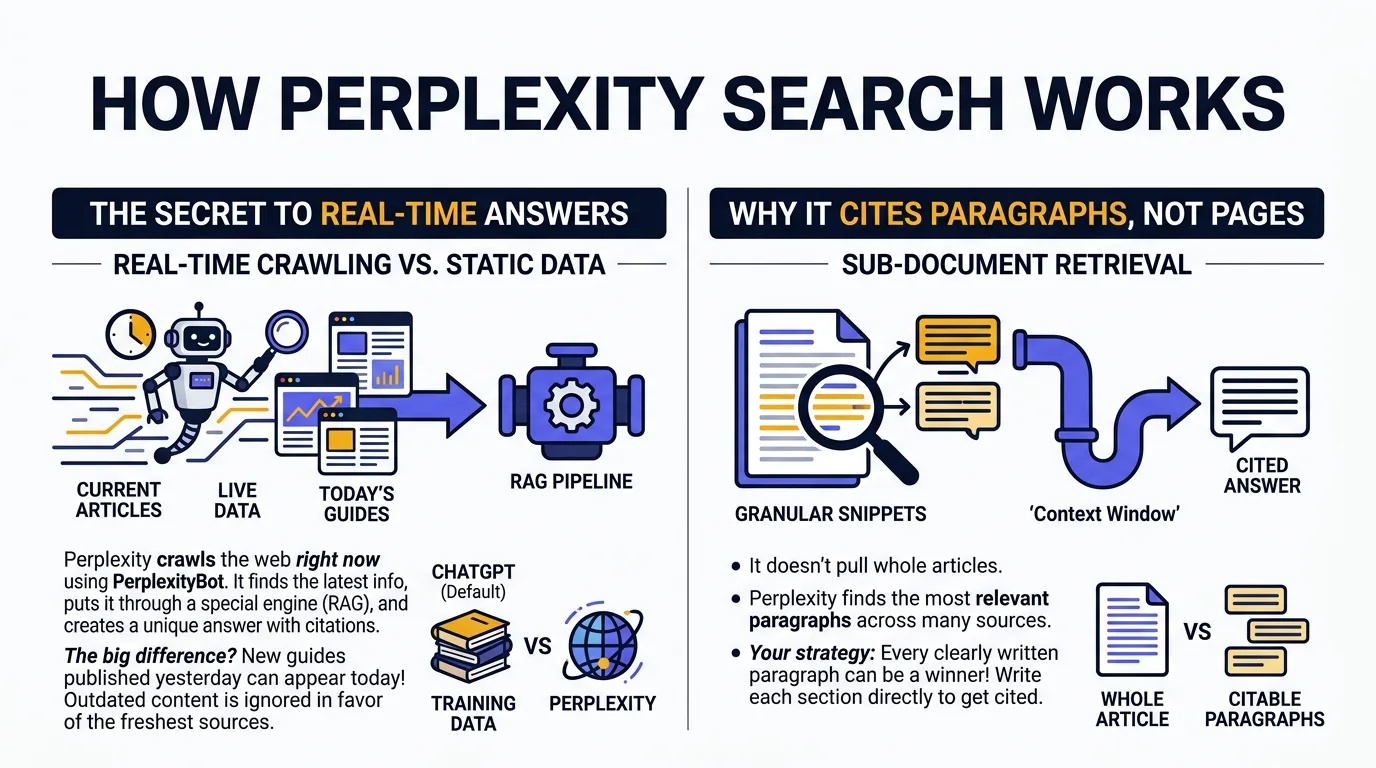
Understanding how Perplexity retrieves and generates answers is the foundation for everything that follows.
Real-time crawling vs. static training data
Perplexity does not answer questions from a fixed training dataset. It crawls the web in real time using PerplexityBot, retrieves current pages, and feeds them into a Retrieval-Augmented Generation (RAG) pipeline that synthesizes an answer and attributes each claim to a source.
This is the most important difference from ChatGPT or Gemini in their default modes. A guide published yesterday can appear in Perplexity citations today. An outdated guide from 18 months ago with no recent updates will be passed over in favor of a fresher source.
Sub-document retrieval — Perplexity cites paragraphs, not pages
Perplexity's retrieval system pulls granular snippets, not whole articles. According to Search Engine Journal's 2026 interview with Perplexity's Jesse Dwyer, AI search is shifting from "whole-document retrieval" to "sub-document retrieval" — the model fills its context window with the most relevant fragments from across multiple sources.
This changes how you should think about content structure. A single clearly-written paragraph that directly answers a specific question can earn a citation even if the rest of the page isn't highly authoritative. Every section of your content is a potential citation unit. Write accordingly.
How to see Your AI Visibility on Perplexity?
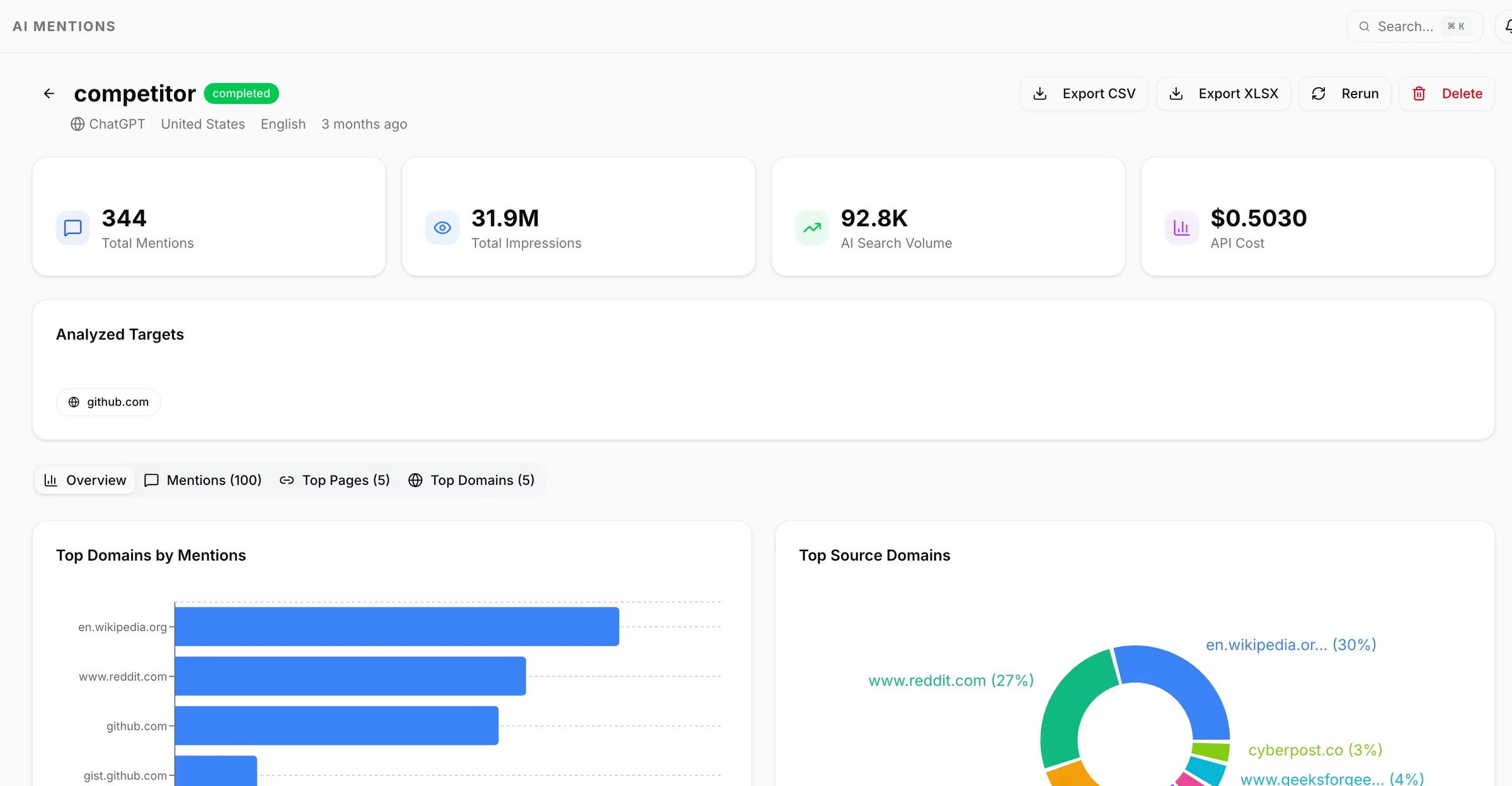
Before Dive deep into what matters for Perplexity to love your website and refer clicks, Let's learn how you can track your AI visibility or AI mentions about your website on Perplexity.
You can use our AI Visibility Tool inside our Copyrocket AI GEO Suite here.
Signup for free account on Copyrocket AI.
Navigate to GEO section and select "AI Mentions".
Then Enter your Domain and click on run analysis.
Navigate to mentions tab and analyze where Perplexity is mentioning you.
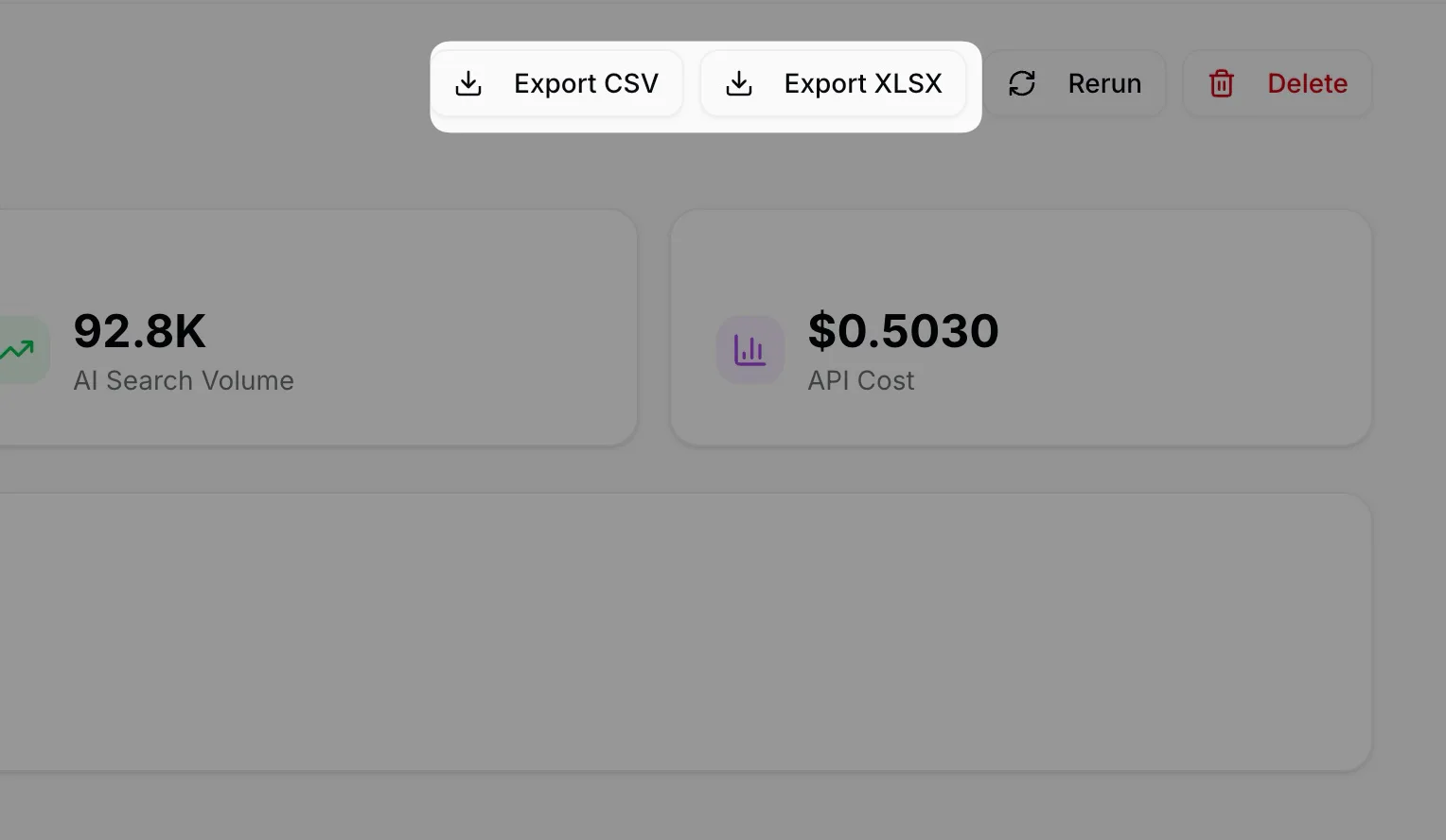
Export the list as CSV/XLSX file for further review.
The 5 Signals That Determine Whether Perplexity Cites You
Perplexity has not published a formal ranking algorithm. The signals below are based on Perplexity's official documentation, third-party research, and analysis of citation patterns.
1. Crawlability — the gating factor
If PerplexityBot can't access your content, nothing else matters. Check your robots.txt file and explicitly allow PerplexityBot:
User-agent: PerplexityBot
Allow: /
Also check your Cloudflare settings, WAF rules, and bot protection configurations. Many sites block Perplexity inadvertently through security tools that treat it as an unrecognized bot. Pages rendered entirely through client-side JavaScript are also unreliable — PerplexityBot needs your content in the initial HTML response to index it.
2. Semantic relevance — the similarity threshold
Perplexity's RAG pipeline matches content to queries using semantic embeddings. Research suggests a similarity threshold of approximately 0.75+ is required for citation eligibility. This means your content needs to directly address the specific question being asked — keyword presence alone is insufficient.
Use question-based H2 and H3 headings that mirror how real users phrase queries in Perplexity. "How does Perplexity rank sources?" performs better than "Ranking factors."
3. Freshness — the recency effect
70% of top Perplexity citations have a visible publication or update date within the last 12–18 months. Content decay begins around the 2–3 month mark for fast-moving topics (AI tools, SaaS, finance, marketing).
Add a visible "Last updated: [Month Year]" timestamp to your pages. For high-priority content, update statistics, examples, and comparisons every 30–60 days. Publish a brief "what changed in this update" note to signal active maintenance.
4. Domain authority — the credibility filter
High-authority domains appear disproportionately in Perplexity citations. Domain authority accounts for approximately 15% of citation weight. Your existing SEO investment — backlinks, brand mentions, author credentials — directly supports your Perplexity visibility.
Author bio pages with real credentials, "about" pages that establish organizational expertise, and "how we tested" methodology sections all contribute to the authority signals Perplexity uses to evaluate source trustworthiness.
5. Extractability — the citation-readiness of your content
Even with strong authority and freshness, Perplexity needs to be able to extract a clean, usable snippet from your page. Pages with clear headings, definition blocks, inline data, and schema markup are 28% more likely to be cited than equivalent pages without these structural features (Wellows).
How to Structure Content Perplexity Will Cite
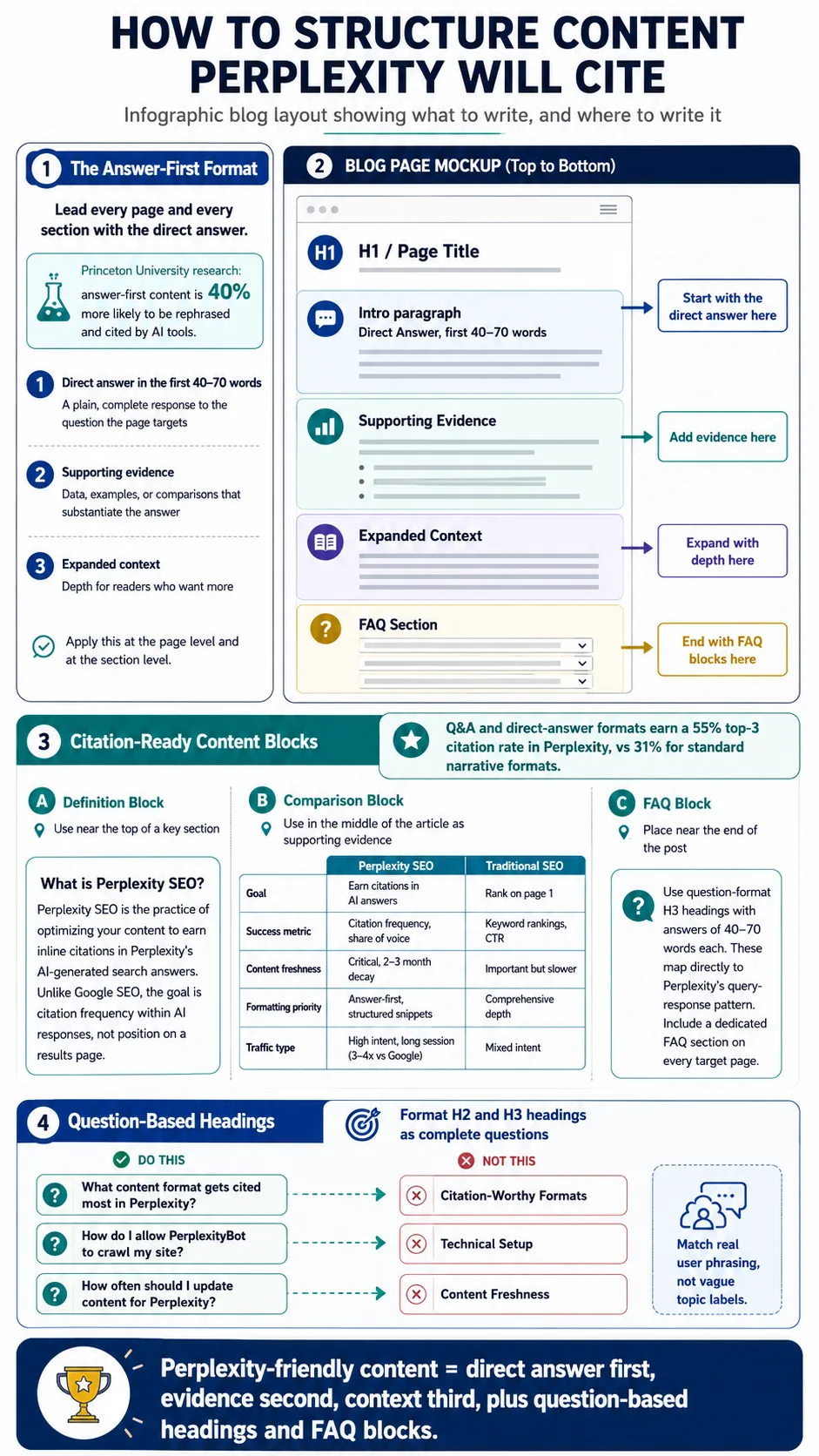
The answer-first format
Lead every page and every section with the direct answer. Research from Princeton University found that answer-first content is 40% more likely to be rephrased and cited by AI tools than content that buries its conclusion.
The structure that consistently earns citations:
Direct answer in the first 40–70 words — a plain, complete response to the question the page targets
Supporting evidence — data, examples, or comparisons that substantiate the answer
Expanded context — depth for readers who want more
Apply this pattern at the page level (first paragraph) and at the section level (first sentence of each H2).
Citation-ready content blocks
Q&A and direct-answer formats earn a 55% top-3 citation rate in Perplexity, compared to 31% for standard narrative formats. Structure your highest-value sections as standalone answer blocks that make complete sense even if extracted from context:
Definition block:
What is Perplexity SEO?
Perplexity SEO is the practice of optimizing your content to earn inline citations in Perplexity's AI-generated search answers. Unlike Google SEO, the goal is citation frequency within AI responses, not position on a results page.
Comparison block:
Perplexity SEO | Traditional SEO | |
|---|---|---|
Goal | Earn citations in AI answers | Rank on page 1 |
Success metric | Citation frequency, share of voice | Keyword rankings, CTR |
Content freshness | Critical — 2–3 month decay | Important but slower |
Formatting priority | Answer-first, structured snippets | Comprehensive depth |
Traffic type | High intent, long session (3–4x vs Google) | Mixed intent |
FAQ block:
Use question-format H3 headings with answers of 40–70 words each. These map directly to Perplexity's query-response pattern. Include a dedicated FAQ section on every target page.
Question-based headings
Format H2 and H3 headings as complete questions that match how real users phrase queries:
"What content format gets cited most in Perplexity?" (not "Citation-Worthy Formats")
"How do I allow PerplexityBot to crawl my site?" (not "Technical Setup")
"How often should I update content for Perplexity?" (not "Content Freshness")
Technical Setup for PerplexityBot
robots.txt: Add the PerplexityBot directive explicitly. Don't rely on a wildcard Allow: / — name the bot directly.
Page speed: PerplexityBot has retrieval timeouts. Pages that load slowly may not be fully indexed. Target server response times under one second and eliminate render-blocking resources.
JavaScript rendering: Content rendered client-side through frameworks like React or Vue may not be accessible to the crawler. Confirm your key content appears in the raw HTML page source (view-source:), not just the rendered DOM.
XML sitemap: Keep your sitemap current. PerplexityBot discovers pages through crawling, internal links, and sitemaps. New content without internal links pointing to it may take longer to get discovered.
Schema markup: Implement FAQ, HowTo, Article, and Organization schema on relevant pages. Schema contributes approximately 10% to citation eligibility by giving Perplexity's retrieval system additional structured signals about your content's topic and type.
Off-Page Strategy — Reddit, YouTube, and Digital PR
Reddit accounts for 46.7% of citations among Perplexity's top sources. This is the most overlooked aspect of Perplexity SEO.
Perplexity actively pulls from community platforms to provide "real-world" experience-based answers — particularly for queries about tools, products, services, and comparisons. A thread where your product is discussed authentically, or where you've contributed expertise, is a citable source.
Reddit: Participate in relevant subreddits (r/SEO, r/content_marketing, r/SaaS, r/marketing). Answer questions directly and substantively. Don't promote — contribute. Perplexity cites specific comments and threads, not just subreddits.
YouTube: Video transcripts are a primary source for how-to queries. If you create video content, ensure your transcripts are accurate and structured around specific questions. Perplexity's YouTube focus mode actively retrieves video content for relevant queries.
Digital PR: A mention in a high-authority publication functions as a trust multiplier. When Perplexity retrieves claims about your product or category from a recognized industry source, it reinforces the authority signal for your own domain. Target publications in your niche — not just broad outlets — because Perplexity values topical authority.
How to Track Your Perplexity Citations
Traditional rank tracking doesn't apply to Perplexity. The metrics to monitor instead:
Referral traffic in GA4: Filter your referral sources for perplexity.ai. This shows how many users clicked through from Perplexity citations to your site. Pay attention to engagement metrics alongside volume — Perplexity referral visitors typically show 3–4x higher session duration than organic Google visitors because they arrive in active research mode.
Citation monitoring: Build a set of 20–40 queries that represent your target audience's research behavior on Perplexity. Run them monthly and record which sources appear, their position within the answer, and whether your content is cited. Track your share of citations across this query set over time.
Share of voice: Across your tracked query set, what percentage of total citations point to your content versus competitors? This is your Perplexity visibility score. If you hold 3 of 8 average citations on your 10 most important queries, your share of voice is approximately 37%.
AI visibility tools: Tools like Otterly.ai, LLMClicks, and Profound automate citation monitoring across Perplexity and other AI search platforms — useful once your manual tracking set exceeds 30–40 queries.
Final Thoughts
Perplexity SEO is more trackable and more immediately responsive than Google SEO. New content can earn citations within days. A structured FAQ section on a page with a visible update date can outperform a two-year-old domain authority giant that hasn't been refreshed.
The practical starting point: audit your highest-traffic pages for answer-first formatting, add question-based H2s, check your robots.txt for PerplexityBot, and set up a 20-query citation tracking set in Perplexity for your core topics. Measure monthly.
CopyRocket's AI writing tools can help you generate citation-ready content blocks, FAQ sections, and structured answer formats at scale — so every page you publish is built for AI citation from the first draft.
Frequently Asked Questions

Written by
Raman Singh
Raman Singh is a highly skilled marketing professional who serves as the head of marketing at Copyrocket AI. With years of experience in the field, Raman has developed a deep understanding of all asp
View all postsYour AI Marketing Agents
Are Ready to Work
Stop spending hours on copywriting. Let AI craft high-converting ads, emails, blog posts & social media content in seconds.
Start Creating for FreeNo credit card required. 50+ AI tools included.
Related Articles
 General
NotebookLM For Coders: Turn Docs Into Faster Code
Code work often fails for a simple reason. You do not have the right context at the right time. You read docs in one tab, skim tickets in another tab, and then...

 General
How to Optimize for AI Search in 2026: The Complete Guide
AI search has shifted from experimental feature to primary search method for millions of users. ChatGPT Search, Google AI Overviews, Perplexity, Claude, and Gem...
 General
Claude Opus 4.6 Review: Here's What New!
Claude Opus 4.6 from Anthropic draws attention because teams want an AI model that writes better code, follows instructions, and stays consistent across long se...